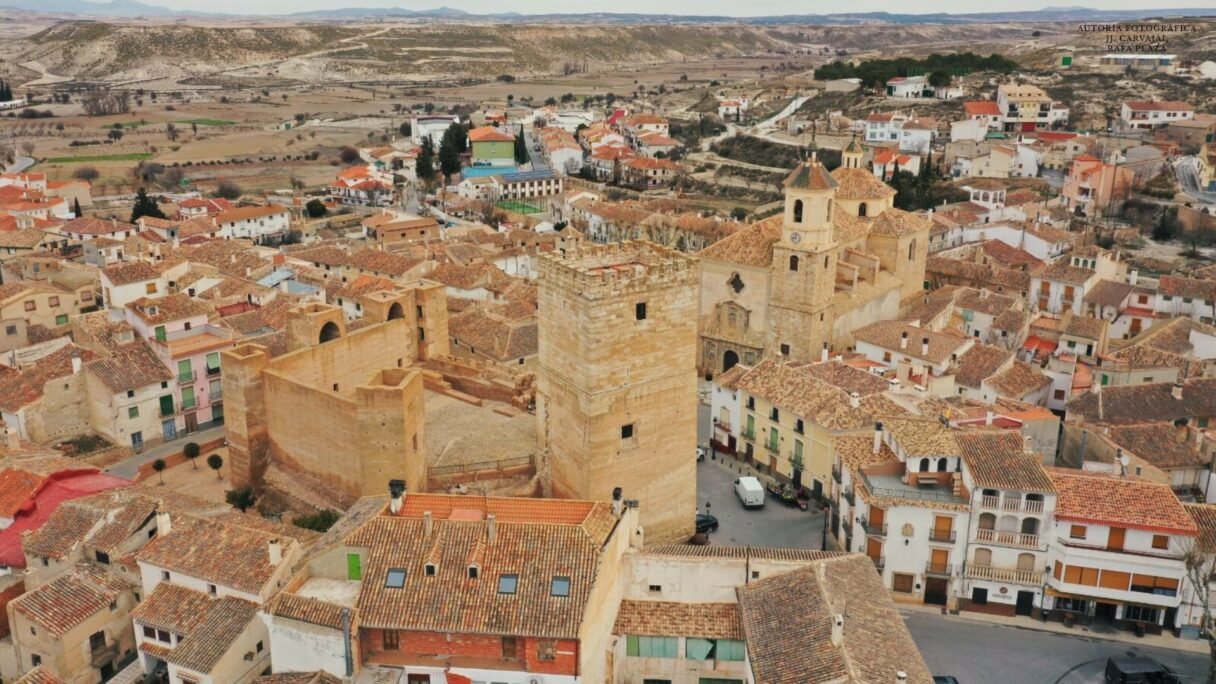
Open a map. Search for Orce. Go on, I’ll wait.
Chances are you’ve never heard of it, and that’s the whole problem I want to talk about today, not who’s to blame for it, because I don’t think blame gets us anywhere useful, but what we might actually do about it.
I’ve lived alongside this village for nearly nine years now, in a cave, off-grid, a short drive from the centre, with a small handful of friends who took me in when they retired out here. I buy my bread here. My neighbours know my face, know roughly what I’ll be buying before I ask, and put up with my Spanish, which is earnest if not elegant. This isn’t an abstraction to me. It’s the texture of my actual life.
And here’s the thing that ought to make every one of us sit up a bit: Orce isn’t just a nice place with a decent tapas bar and a friendly church square. It sits on archaeological finds that matter on a European scale, arguably a global one. This is a village with a genuine claim to a chapter in human history. Not many places of 850 (or thereabouts, closer to 1,400 a few years back) can say that with a straight face.
So why does almost nobody outside a small circle of specialists know it?
I don’t think this is anyone’s fault, exactly. Villages like this one are up against something much bigger than any single decision, a whole century that’s been quietly pulling people toward cities, toward the coast, toward anywhere with more lights and faster broadband. That’s not news, and it’s not unique to Orce. What interests me is whether we, the people who actually live here, who actually love it here, are doing enough to fight that pull with a story worth telling.
Because I don’t think the answer is more low-key local events nobody outside the village hears about. I think the answer is bigger, scrappier, and a bit more shameless than that.
What if Orce told its own story properly, for once? Not a heritage board with fading laminate, but something a curious traveller stumbles across on their phone and thinks, hang on, I need to see that in person. What if the archaeological story became the headline it deserves to be, told with some actual flair, rather than tucked away for people who already knew to look for it?
What if the people who’ve moved here from elsewhere, and there are more of us than you’d think, were invited to help tell that story to the audiences we came from? I have a newsletter. I have readers scattered across Britain and beyond who’ve never set foot in Andalucía and have no earthly reason to think about Orce, unless somebody gives them one. I’d wager I’m not the only person round here in that position.
What if the shopkeepers, the bar owners, the families who’ve been here for generations, and the newcomers who chose it deliberately, sat in the same room occasionally and simply asked each other: what would make someone drive an extra hour off the main road for this place?
I don’t have the answers. I’m a scribbler, not a strategist, and I’d rather ask the question badly than not ask it at all. But I do know this: a place doesn’t stay alive because the people in it are proud of it. Pride is cheap; everybody’s proud of home, that’s not an achievement, that’s just belonging. What keeps a place alive is somebody, or better yet a lot of somebodies, doing the unglamorous work of making the case for it, over and over, to people who have no particular reason to care unless they’re given one.
So here’s my actual pitch, since I promised you a point rather than just a wander round the village. Orce has the raw material for a proper comeback story, one written from both inside the village and out. What it needs is the will to tell it loudly, to whoever will listen, and a bit of imagination about who that “whoever” might be.
I’d start with the map. Then I’d start talking.