For decades, European business travel followed a grim and joyless script.
4:00 AM alarms. Low-cost carrier queues that feel like behavioural experiments. Coffee that tastes faintly of regret. A two-hour meeting in a glass box somewhere near Frankfurt, followed by the heroic dash back to the airport having seen precisely nothing of the place beyond a taxi window and the inside of a Pret.
It was motion masquerading as productivity… and we all politely pretended it made sense.
Then something interesting happened.
The wheels didn’t just wobble… they came off. Burnout became measurable. Carbon accounting stopped being a “future problem”. And companies quietly realised that flying a senior manager across a continent for a meeting that could have been an email wasn’t “lean”… it was just stupidly expensive theatre.
So here we are in 2026… and the shift is unmistakable.
Less travel. Longer stays. Better reasons.
Not louder… better.
From Day-Tripping to Purpose-Driven Travel
What we’re seeing now isn’t the end of business travel. It’s the end of pointless business travel.
The modern European approach is increasingly built around intent.
Instead of three frantic flights a month, teams are taking one considered trip… staying a week… sometimes two. Meetings are clustered. Dead time becomes thinking time. And crucially, the human doing the travelling is treated less like a courier pigeon and more like a functioning nervous system.
This is where “slow business” enters the chat.
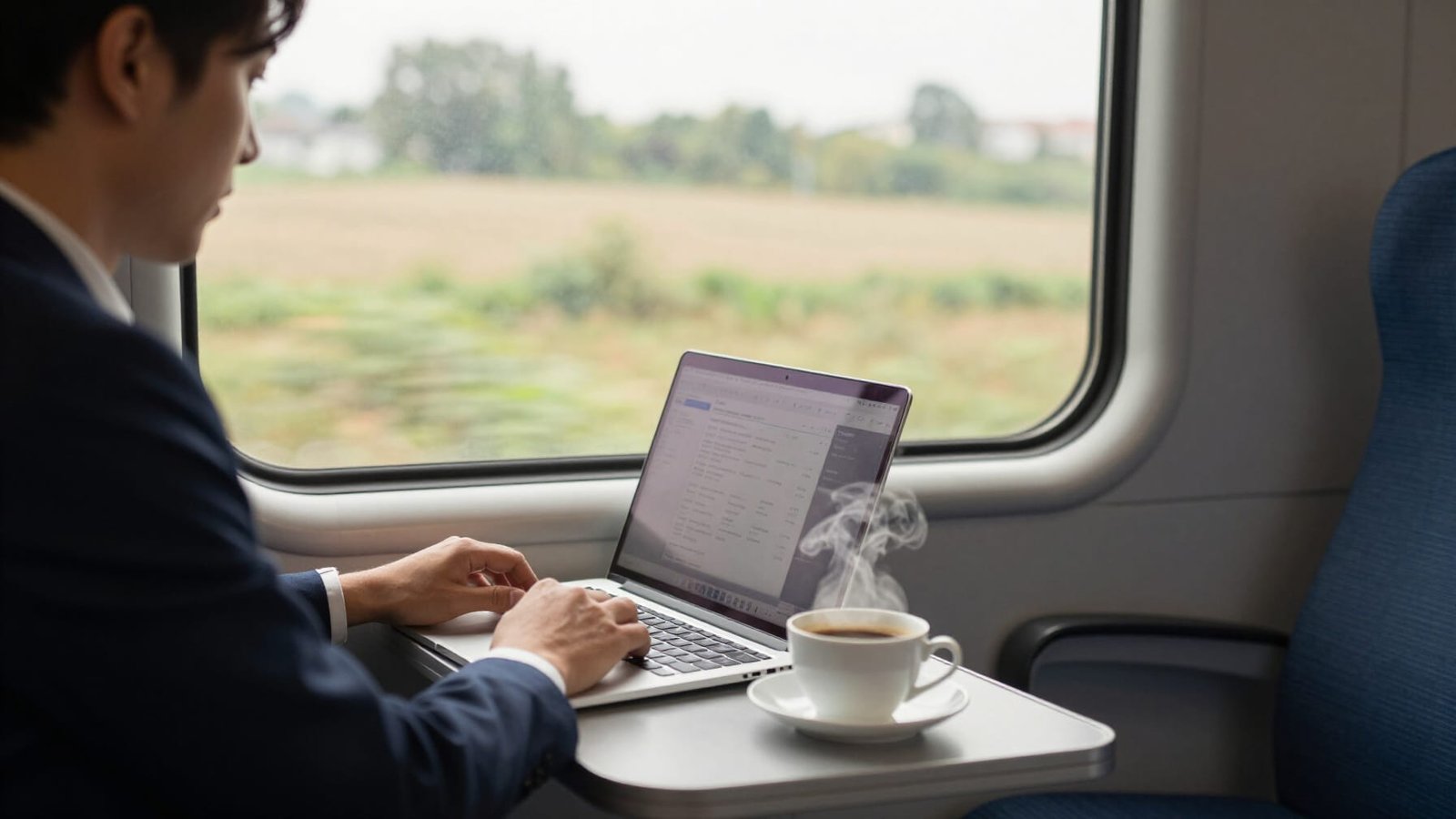
High-speed rail has had its quiet renaissance. Not because it’s trendy… but because it works. You board in a city centre, you leave with your dignity intact, and you arrive without needing a chiropractor. The journey becomes usable time… not an endurance event.
And once you’re there… you stay.
The Accidental Brilliance of the Micro-Retirement
Here’s the part nobody planned… but everyone benefits from.
Longer stays have blurred the line between work trip and something far more humane.
A consultant working mornings from a rented place in Spain… meetings mid-week… afternoons walking, reading, thinking. An exec setting up between meetings in a café in Lyon… actually noticing the city instead of consuming it at speed.
This isn’t a sabbatical. It’s not a digital nomad fantasy either.
It’s a micro-retirement… folded neatly into a working life.
Still earning. Still delivering. But no longer living in a constant state of departure lounge cortisol.
And the uncomfortable truth for old-school management?
It works.
Better for People. Better for the Planet. Better for the Ledger.
The numbers back it up… which is why this shift has teeth.
Fewer flights slash travel budgets without sacrificing presence. Longer stays reduce churn and burnout, which quietly saves recruitment costs nobody ever wants to talk about. Rail and regional travel ease emissions pressure without the need for sanctimonious PowerPoint slides.
But the real gain is harder to spreadsheet.
People come back sharper. Less brittle. More engaged.
When someone has time to arrive somewhere… mentally as well as physically… the work improves. Relationships deepen. Context is absorbed rather than skimmed.
Turns out humans do better work when they aren’t treated like freight.
Who knew.
Europe’s Quiet Advantage
This model works particularly well in Europe… and that’s not an accident.
Dense cities. Connected rail. Cultures built around walking, lingering, eating properly. Europe doesn’t reward rushing… it rewards presence.
Business travel here is becoming less about conquest and more about calibration.
One good trip instead of five bad ones. One week embedded instead of twelve hours exhausted. One meaningful conversation instead of a blur of handshakes and boarding passes.
It’s not glamorous. It doesn’t shout. It just… functions.
The Bigger Shift Nobody’s Calling Out
Strip away the jargon and what’s really happening is this:
We are quietly redesigning work around human endurance rather than corporate impatience.
The death of the day-tripper isn’t a loss. It’s a mercy.
And the rise of the micro-retirement isn’t indulgence… it’s an acknowledgement that people aren’t machines, and pretending otherwise was costing everyone more than it ever saved.
Quality over quantity isn’t a slogan anymore. It’s becoming policy.
And in a world obsessed with speed… that might be the most radical business decision Europe has made in years.