Here’s What That Really Means


For years, digital nomad visas felt like a European arms race. Portugal, Spain, Estonia… each rolling out variations on the same promise. Sunshine, decent Wi-Fi, and the legal right to stay a little longer than a tourist.
Now, quietly but deliberately, Sri Lanka has entered the conversation.
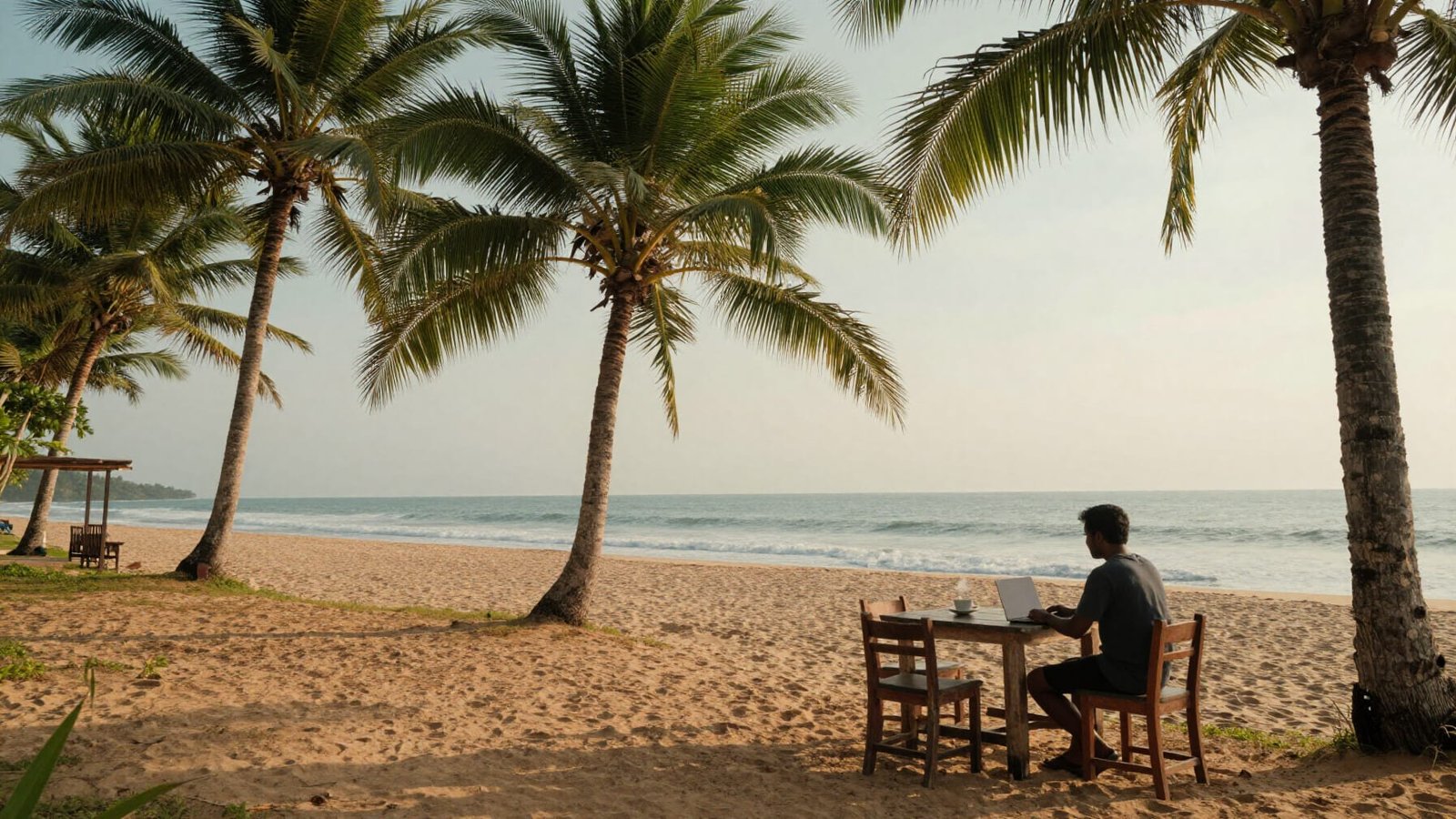
In February 2026, the island nation officially launched its digital nomad visa, reopening an idea first floated back in 2021. And while it may sit well outside Europe’s borders, it speaks directly to a growing reality many European workers now share… work is no longer anchored to place.
The question isn’t can you work remotely anymore. It’s where does it make sense to build a life while you do.
The rise of slower nomadism
Post-pandemic nomadism has matured. The frantic city-hopping, one-month-per-country approach has given way to something calmer and more intentional.
People are staying put longer. Learning places rather than passing through them. Renting apartments instead of hostels. Choosing environments that support routine, creativity, and mental space.
Sri Lanka’s new visa is clearly designed with that quieter, longer-term traveller in mind.
What the Sri Lanka digital nomad visa actually offers
At its core, the visa is refreshingly straightforward.
Applicants must be over 18 and earn at least €1,700 per month, working exclusively for clients or employers outside Sri Lanka. If you have more than two children, the income threshold increases slightly.
The visa is valid for one year, costs €425 per person, and can be renewed annually. Applications are handled through the Department of Immigration and Emigration Sri Lanka.
There are conditions, of course. Visa holders cannot work for Sri Lankan companies and are expected to refrain from political or disruptive activities. Nothing unusual by international standards… but worth reading properly rather than skimming past.
Why Sri Lanka is even on the radar
Often described as the pearl of the Indian Ocean, Sri Lanka attracts more than two million visitors each year, many drawn by images they half-recognise before they even know the country.
The fortified streets of Galle Fort.
The misty train journey from Ella to Kandy, winding through tea plantations.
The impossible geometry of Sigiriya, rising from jungle like a dare.
Then there’s the wildlife. Elephants, leopards, tropical birds, and national parks that still feel largely unfiltered. Add long stretches of south-coast beaches like Mirissa, and it’s easy to see why the country lingers in people’s imaginations.
For those drawn to slower exploration, Sri Lanka also launched the Pekoe Trail, a 300-kilometre walking route through the Central Highlands, designed to be tackled in stages rather than rushed.
The practical reality… Wi-Fi included
This is where the romance needs a reality check.
Sri Lanka’s internet infrastructure is improving, but it’s not flawless. According to the Speedtest Global Index, the country currently ranks low for fixed broadband speeds.
For remote workers, this means expectations need adjusting. Fibre connections exist, particularly in urban hubs, but reliability can vary. Many long-stay visitors mitigate this with mobile data backups, flexible schedules, and realistic assumptions about video calls versus deep work.
In other words, Sri Lanka may favour writers, designers, consultants, and async-friendly roles over always-on corporate setups.
Why this matters beyond Sri Lanka
For European workers in particular, Sri Lanka’s move is interesting not because it competes with Europe… but because it expands the map.
It reflects a broader truth. Countries are no longer just competing for tourists. They’re competing for residents. For talent. For people who spend, rent, and contribute locally, but don’t strain job markets.
The digital nomad visa isn’t about beaches. It’s about acknowledging that modern work has untethered itself… and governments are adapting, some faster than others.
A final thought
Sri Lanka won’t be for everyone. Time zones, infrastructure, and cultural adjustment matter. But for those looking to step outside familiar European circuits without abandoning stability altogether, it offers something compelling.
Not a fantasy. A possibility.
And in a world where work increasingly lives online, sometimes possibility is the most valuable visa of all.